


Like many other white people in America, I am humbled by what I have failed to recognize, soul-searching about how to listen better, and taking up activism efforts that are available to me right now. I am grateful for the generosity of the many Black and other people of color who have shared their stories and insights around racism over the past couple of months.
Read moreFOUR WAYS TO LIVE OUT YOUR ORGANIZATIONAL VALUES

Photo by Sharon McCutcheon on Unsplash
A nonprofit I worked with lately was grappling with a core question: how do we live our principles of collaboration and inclusivity? The group started by considering how to increase diversity among the staff. But they also recognized that they needed to look at their overall organizational culture to make sure they showed up in ways that supported their values every day.
From feminist organizing principles to holacracy, there are a number of emerging approaches to cultures that are more open, horizontal, and experiential. Here are four that I’ve found useful.
ALTERNATIVE MODELS TO DISTRIBUTE POWER
This article by the Building Movement Project provides a set of foundations for distributed leadership, with a greater level of shared decision-making. They include:
Build trust, via transparency, sharing information and demonstrating trust in staff decisions.
Invest in learning for all staff to make informed decisions. Clarify roles and engage all staff.
Support organizational values, building in structures such as regular conversations with diverse viewpoints.
Commit to shared decision-making. Embrace autonomy and push decision-making down, and ensure that leaders control only what they need to control, not everything they could control.
One of the impacts noted in an organization that took this approach was that staff members really began to find their own voices.
SELF-MANAGEMENT
The concept of self-managed teams, including the structure of holacracy, was popularized by Frederic Laloux in his book Reinventing Organizations. This article provides a thoughtful overview of self-management in action. Self-management is a complex concept, but a few intriguing concepts include:
Get out of siloes. Think in terms of roles to be filled. Each person is likely to have skills and interests in a variety of roles, so this helps use people to their best abilities.
Use teams that design and govern themselves to identify challenges and find ways to address them.
Organize work in terms of short sprints, finding workable (not necessarily the best) solutions and iterating rapidly to maintain accountability, flexibility, and learning.
Take “total responsibility” for improvements, even if they’re outside your role.
FEMINIST ORGANIZING PRINCIPLES
This article offers insight into how feminist organizing principles can be used in practice to shape an organization. And this blog post makes an intriguing case for ways in which feminism and agile principles coincide. The team I worked with added their own aspects of these principles, some of which are included below.
Collaboration over hierarchy. The commitment to inclusivity requires actively stepping away from authoritarian approaches to decision-making and power.
Making power visible supports the shift from hierarchy to collaboration. This may require investigating privilege and power structures that the organization has, perhaps unwittingly, perpetuated, and a willingness to address structures that don't align with an inclusive, collaborative approach.
Alternative agendas from status quo. Groups incorporating feminist organizing principles are often acting within a world with very different beliefs and approaches. As these principles infuse the organization, they also become visible in its work in the world, both in terms of what challenges they take on and in how they model their values.
Playful, experimental, and iterative. Shifting away from existing power structures is no small thing. A healthy organization will offer members the grace and freedom to make mistakes, laugh together, and keep trying new ways to make shifts.
Culture of care. This broad term reflects the importance of seeing the whole person, being anchored in relationship, and paying attention to what truly supports each person. Each organization will have its own unique culture of care.
HABITS OF THE HEART
Finally, this article from the Center for Courage and Renewal offers a deeper dive into the concept of integrating heart, mind, and body. Their principles include:
We’re all in this together. Groups hold an intention of truly supporting one another and creating community.
Appreciation of otherness. Sometimes groups want to skim over differences of all types, but it’s important to actively acknowledge the value of differences.
Hold tension creatively. Tensions are inevitable and they make people uncomfortable. It can be helpful to acknowledge the existence of tensions, the fact that they may not be fully reconcilable, and the value of exploring workable solutions that honor the differences.
Sense of voice and agency. Each person is committed to supporting others in growing in their ability to speak for their beliefs and take responsibility for decisions that they make.
Capacity to create community. It takes a village to support social change.
The Center also has a blog post describing their exploration of holacracy.
The team I worked with took an afternoon to talk through these approaches. They noted areas of overlap and unique aspects of each approach. They discussed how they aligned with organizational values and aspirations. From there, they prioritized the elements that seemed like the best fit for them and developed some short-term “sprints” to practice using these approaches.
One of the important learnings for them was that simply opening up this discussion helped everyone on the team be more attentive to collaboration and inclusivity. Creating this ongoing conversation allowed them to acknowledge what aspects were more difficult to put in practice, and work together to rethink how best to live their values.
KEEP IT SIMPLE

Photo by Bogomil Mihaylov on Unsplash
You’ve seen them—the strategic plans that are long and detailed, a spreadsheet filled with pages and pages of objectives, strategies and tactics. And you know what? Those plans are great for people who thrive on highly-structured frameworks and know they will continually check back and update their progress.
This blog is for the rest of us.
Your time is limited. Your budget is limited. Your board has limited availability to think this through. But a strategy that could really inspire, drive action and keep you focused—is that even possible? And would it make a difference?
Yes, and yes.
If you don’t have a plan, or if you have one that more or less just reiterates what you do and how you’ll do more of it, you’re missing out. Your staff may be spinning their wheels on things that keep them busy but don’t lead to the kind of impact you could have. Your funders may not see a compelling vision that they want to support. A good plan can drive meaningful activity toward a critical goal and inspire the staff, Board and donors.
Let’s get started.
You will focus your efforts on three things: IMPACT, STRATEGY, and SUCCESS. To get you out of the program planning/laundry list mode and into a strategic mindset, we’ll start with IMPACT and STRATEGY.
IMPACT
This is your starting point. It encompasses your vision, your mission, and an impact statement.
The vision tells what the world will look like when you have succeeded in your mission.
The mission will be better for being short and sweet. Think tagline:
We do X (what) for Y (who)
This helps it be both memorable and inspirational. A few examples:
Splash: We clean water for kids.
MenEngage: We’re working with boys and men to promote gender equality around the world
WalkDenver: To reclaim Denver’s streets for people.
If you have a lengthy mission statement that includes language you’re really attached to, great. Put it into a statement of guiding principles or translate it into values. That way you have a memorable mission AND a thoughtful explanation of how you work.
Finally, the impact statement is specific to this strategic plan. This is the one overarching goal that drives your whole plan. Again, it’s short. It’s also measurable.
We achieve X by Y timeframe
This is hard. You do many different things. But the key to thinking strategically is to get out of the list of activities and into how the world will be different three or five years from now when you’ve been successful.
Another way to think about it comes from The 4 Disciplines of Execution: If everything else continued as is, what’s the one thing you could drive toward that would make the most difference?
Sometimes groups with widely disparate activities find it hard to establish a single impact statement. If you’ve made your best effort and can’t establish a single overarching goal for this time period, it’s ok to identify more than one—just keep it to a small number, or it will be hard to remember and harder to prioritize your work.
STRATEGY
Here’s where you really diverge from listing programs. How will you drive change? You need to consider both how you think change happens, sometimes referred to as a Theory of Change and what niche you fill in creating that change. Your strategy represents your best guess about how you can frame and maintain leadership in a unique niche.
Some framing statements that may help you think about this:
We are the ones who:
We are stellar at this thing that no one else can do as well as we do:
We focus on filling a unique niche: our clients, type of work, geography, or how we drive change and empower action. (aka “Where do we play?” AND where we don’t…):
We do it in unique ways (aka “How do we win?”):
We’ll resist the temptation to:
How? (Note: there might be more than one temptation…)
We’ll stay ahead by:
We won’t do:
Use whatever framing helps you to come up with 3-5 statements about your strategy. These will drive the way you structure your work and processes, so they may or may not be something you want to share publicly.
Congratulations—with an IMPACT and STRATEGY, you’re already ahead of the game, and far more focused on strategy than most organizations.
In my next blog, we’ll address SUCCESS: defining specific priorities and objectives, and tracking and measuring success. Stay tuned, and check out additional Entrellis resources here.
What's in the circle?

Photo by Sabri Tuzcu on Unsplash
Have you ever come out of a strategic planning workshop full of great ideas and big visions—but without a clear focus? You're not alone. Coming away with an actual strategy is the hardest part of a strategic planning process. How can you tell whether you have a strategy? Look at your current strategic plan with one question in mind: Does this plan tell me what we DON’T do?
If your answer is NO, check out this simple visual. The Strategy Circle can help teams make those hard choices more easily. And don't feel as if you have to wait for your next strategic plan--you can begin working toward greater focus at any time.
The Strategy Circle includes three elements: opportunity, priorities, and everything else.

OUR BIG OPPORTUNITY
Start with an overarching goal for the next few years, based on your vision and mission. How can your organization have the most powerful impact? This gives you a clear guiding star to set priorities.
OUR TOP PRIORITIES
Think about your key programmatic areas. Your final plan may include organizational or financial priorities, but we start with programs and services since they drive your impact.
What are the things that will most contribute toward achieving your overarching goal? I recommend sticking with no more than 2-3 priorities in each program area. More than that and it can become more of a listing of what you do than a clear set of priorities.
EVERYTHING ELSE
This is where your plan becomes truly strategic. Think through activities that you engage in that didn’t make the top three list. Ask these three questions:
1. What are we ready to say we will NOT do any longer?
2. Who else could do it? As we’re focusing more on our priorities, how could we partner or divest activities to other groups who may be a better fit at this time?
3. If we kept doing it, how could we make it simpler and less resource-intensive? For example, maybe a training could turn into a self-guided worksheet.
Drawing that clear line between what’s in the circle of priorities and what’s out is the first step toward redirecting your work toward what matters most.
EXAMPLE FROM THE FIELD
One of our clients had a big goal: they had pioneered a lot of work and were ready to scale up their impacts. To do this, they chose to de-emphasize small-scale programs and repetitive projects in favor of large innovations with broader effects. They also decided to focus their communications on high-impact, broadly applicable information rather than lengthy reports that wouldn’t be read.
This shift wasn’t easy, as much of this work was their bread and butter. But working through the strategy circle helped them realize that they wanted to step up, and they began brainstorming ways to shift their fundraising model to meet their big goal. They also felt some relief from letting go of work that had become less inspiring for the staff. Instead, they were energized by their shared commitment to making more impact.
TEN-MINUTE TRIAL
You can use the Strategy Circle with any program or service that you’re having some doubts about. How can you focus on what adds the most value? How might you let go of lower-impact work? See if you can identify what should be in or out of the circle.
Remember that you don’t have to commit right away. Consider this an experiment. Talk to your colleagues and see if you can come up with one small step to increase focus and reduce work that is no longer the best fit.
DIG DEEPER
This article on social innovation by Ann Mei Chang, author of Lean Impact: How to Innovate for Radically Greater Social Good, addresses issues around creating value, and offers numerous examples of how to focus on what matters most. Or visit the Entrellis resources page for more ideas.
Make it real

Photo by David Pisnoy on Unsplash
The next time you’re questioning your direction or priorities, try something radical: skip the long analysis of each option and jump right into making it real.
Taking an idea and creating something real and tangible that illustrates it—a simple model, sketch, or process description of something you want to explore--is a concept from the design thinking world. We’ve seen groups make an app on index cards, draw a poster-size version of a dashboard, test a new way of holding meetings, or create scenarios to walk their clients through.
You can use this visual representation or prototype to elicit quick feedback from colleagues or clients. The responses you get may lead you to modify your approach or scrap an early idea entirely. Ideas may go through multiple iterations as you refine and improve them based on feedback at each stage. Your ultimate outcome may integrate elements from more than one option.
BREAK THROUGH CHALLENGES
Prototyping is a great tool for helping nonprofit organizations break through places where they’re stuck. Here are a few reasons why:
There’s less at stake with a quick and simple prototype, making it easier to move beyond your comfort zone for some fresh thinking.
It can get you the kind of immediate, concrete feedback that an abstract idea can’t. Making a concept more “real” makes it easier for people to react to. A rough, unpolished drawing actually reduces the pressure to be too polite in a critique. You can help by asking your testers to be creative and offer improvements to your ideas.
Prototypes are really helpful in creating a framework if your idea lacks definition or constraints. They give vague ideas a shape.
You can quickly explore several high-contrast options, which will get you more unexpected insights or shifts in thinking than will minor variants of the tried-and-true.
EXAMPLE FROM THE FIELD
One of our clients was leading a well-funded opportunity to build a center for the youth they served. This center would allow them to reach many more kids and their families, create partnerships with tenants serving other needs, and dream big about long-term impacts. There were, in fact, so many possibilities that the client was stumped—where to begin?
We worked with the executive director to tease out three different ideas for key drivers of the center. In one scenario, the center would strive for long-term financial self-sufficiency. This would lead toward partnerships that were revenue-raising. A second idea was to focus on workforce readiness. This would lead to a set of educational programs from early childhood to post-secondary support and training. The third option the client identified was a holistic program for the children’s mind, body, and spirit, focusing on helping them thrive and create meaningful lives.
Each of these approaches could lead to different choices about the center’s vision, goals, and partnerships. The client and her team did some sketches to map out how each version would look and feel in practice, and used these to get feedback from potential partners to improve and refine the options.
TEN-MINUTE TRIAL
Give it a try! Where are you questioning your direction or priorities? It could be big strategic thinking, a specific program, or even your future work. Pick something and create a very simple image of each option. You can take longer than ten minutes, but a short timeframe helps keep you from overthinking it.
Step 1: Pick ideas. Identify 3-4 options you're considering. It can be especially useful to take a couple of your first ideas and stretch them—how could they be more radical, more risky? Remember, you’re not trying to get the right answer, you’re expanding your range of ideas.
Step 2: Draw it. Engage a different part of your brain with a quick visual representation of each option: a sketch, a process design, or a map of how it would work in the world.
Step 3: Reflect. What resonates most? Why? What did you have the strongest reaction against? Why? What’s one thing you’ll take away from this?
Extra credit: Share your prototypes with a colleague or friend and seek their reaction. You can use this to refine your concepts and keep sharing them for more feedback.
DIG DEEPER
For more about what prototypes can look like and why they matter, see Ideo's blog on six tips for how to prototype a service.
Decision? What decision?
How decisions get made can be an organizational blind spot. It’s easy to see how. Those who make decisions are generally focused on the outcome of the decision. The process is secondary, sometimes almost invisible. But for those who don’t hold the decision-making power, it matters a lot that they understand what’s happening, why, and feel secure that important input will be incorporated.
CULTURE MATTERS. Organizational cultures vary. Some groups have clear processes in place. Some may have very hierarchical decision-making processes. Other groups, such as those that value a high degree of flexibility or an organic approach to change, or those on the cusp of growing from a small to a mid-sized team, may end up with less clearly structured approaches to decisions. Any of these approaches can work, but if your organization frequently runs into challenges around its decision-making, it may be time to think through improvements. It’s important, however, to understand what your culture values and how that affects how decisions get made. If changes are made that don’t align with the culture, they may not stick.
BUILDING TRUST. Decision-making processes can have a significant impact on organizational trust. The whole staff needs to have trust that there will be:
transparency (affected staff are informed, the process for getting input and making the decision is clear, and there’s some avenue to review a decision that’s not working out)
consistency (similar decisions are made in similar ways)
reliability (there is follow-up and things aren’t changed after the fact)
This provides grounding for a sense of greater stability and trust that things work in a clear and predictable way. Even better is to ensure that when decisions or decision-making processes don’t work out well, the organization is committed to understanding why not and improving its skills.
Any decision-making framework—and the decisions made—may not feel perfect. But a strong team will engage in regular review of how things are working in practice. Reflecting on what’s working strengthens the organization’s learning. It also helps build team unity and commitment to decisions—even those they don’t agree with.
THE FRAMEWORK. The framework outlined below helps establish a consistent approach, with some built-in learning. It can be useful to practice the framework on smaller decisions first in case you need to make some adjustments for your organization.
STEP 1: FRAME IT. As the need for a particular decision emerges, there’s generally someone who is motivated to get an answer. We call this person—or group—the decision “driver.” The driver may not have ultimate decision-making authority, but they need a decision in order to move forward in some arena. The driver identifies a need and why it’s important to the organization. They can also move the process forward by suggesting who needs to make the decision, who will have what types of input at what stages, and how that input will be managed. If needed, they confirm this approach with the final decision-maker.
The driver also makes sure that the fact that this decision is under consideration is shared more broadly, perhaps with all staff, or with those most affected. It’s important for these stakeholders to understand the drivers behind the decision as well as the timing. Taking the time to set up the decision will not only help things move forward more smoothly, but it can also help capture wisdom from those who may have faced similar decisions.
STEP 2: CONSIDER AND DECIDE. This is the part that people are most used to. The driver (or designated team members) engage in whatever research or exploration is needed, as well as seeking initial input from key stakeholders. They may go through more than one iteration around an option, seeking follow-up input as they improve on their ideas. Based on this input, they develop a final set of options and a recommendation.The decision-maker(s) make the decision. The driver documents the process and notifies all key stakeholders.
STEP 3: REVIEW. There are two potential types of decision-making review:
Standard. Important decisions are subject to a short debrief to see how things are going over time. The leadership team could set aside one meeting per quarter to review decisions, for example.
Exceptional. Sometimes decisions may not be workable or may end up not being adhered to. Anyone should be able to request a review in this situation. The goal is to (a) understand why the decision wasn’t adhered to, (b) determine whether any shift makes sense, and (c) identify how these concerns could be addressed in future decisions.
What is important is that the review step is a consistent part of the process and that it is used to help the organization stay on track and not abandon a decision just because the decision or its implementation was flawed. Having this step in place allows the organization to ease up a bit on getting things right the first time.
ADDITIONAL RESOURCES. A number of helpful frameworks focus on related aspects of decision-making. Some, like DARCI and RAPID, help address who should have what role in decision-making. Others, like The Social Transformation Project’s 5 Pathways to Effective Decision-Making, or this HBR article on “Deciding How to Decide,” focus more on what approach to use when. These frameworks can add to the consistency of a decision-making process.
The art of the follow-up question

One of the critical tools in user-centered innovation is asking a lot of questions. You can make your questioning even more effective by perfecting the art of the follow-up question. In fact, even not-so-perfect follow-up questions will do.
The key is to find ways to break through assumptions. Like finding cracks in a smooth surface, you can chisel your way to a better program or product by making your team (or yourself) answer questions they wouldn’t otherwise think to ask.
How do you know?
This question goes right to the heart of the matter. Don’t be satisfied with what you think you know. Take a look at where the thinking comes from. In particular, if you’re thinking about a product that meets needs for some clientele (external or internal), have you asked them about it? When you do ask for more input, be sure you’re not biased to confirming your assumptions. You’ll get more creative solutions if you can take an open-ended approach that might yield you some nuggets of wisdom to improve your ideas.
What have you forgotten?
This is a great question to ask at multiple stages along the path of developing a concept. It makes you pause. It can be used in a peer coaching context. For example, two team members could have a brief weekly check-in to ask each other this question about their current work. If you’re stuck and can’t think of anything you’ve forgotten, ask someone else, “What have I forgotten?”

How can it be simpler?
This is one of my favorites. People often think big in developing solutions. This can occur out of enthusiasm--or out of fear of failing if they don’t think of everything. Either way, the risk is that things get stuck because the prospect of implementing them becomes overwhelming. “How can it be simpler” helps break things down into bite-sized pieces. Typically I’ll ask it at least two or three times to stretch a team’s thinking beyond what they first imagine.
The general “How can it be…?” approach can be used in other contexts as well. For example, in brainstorming, I’ll ask people to come up with a crazy idea. They’ll typically stretch a little for this. Then I ask them to come up with something even crazier. This time around, it feels more like a game, which means people get playful--and really creative.
You get the idea. It’s related to the concept of “5 Whys,” nicely explained here by Mindtools. Give it a try--and see what you can shake loose.
Flying Under New York
I was on a plane recently that was taking off from Newark. As we taxied along the runway, a little girl behind me said,
“Mommy! Is that New York City? Are we going to fly over it?” Without missing a beat, she added, “Imagine if we flew under it!”
I was amazed. How did she do that? How did she so effortlessly veer from the real to the fantastic? Let’s fly under New York!
As someone who spends a lot of time coaxing people to think outside the box, I’ve developed a great appreciation for the power of envisioning the impossible, of flying free of constraints--or devising solutions within ridiculous constraints.
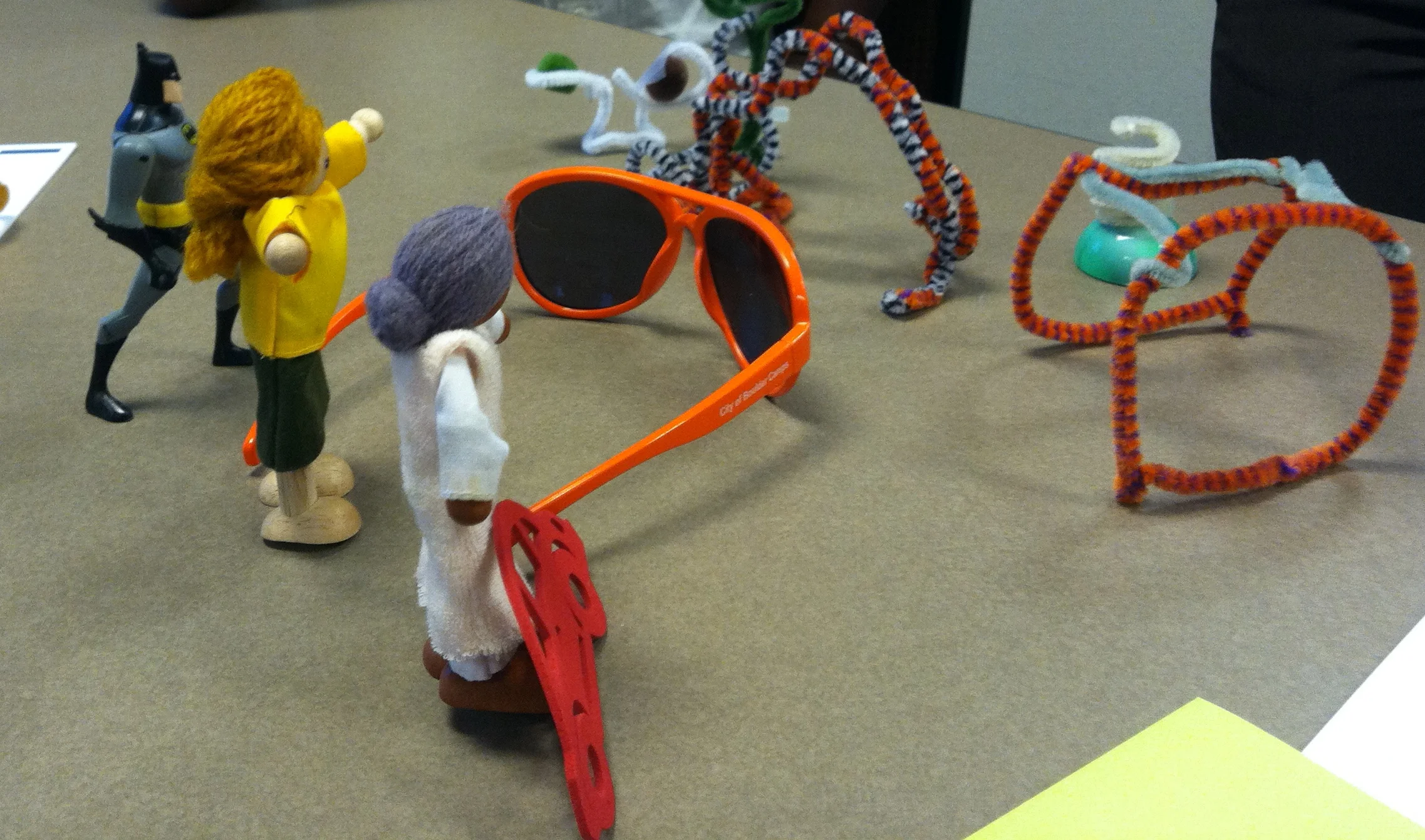
This gift we have, of imagination, of seeing beyond what is to what might, perhaps, in some alternate state of the world, be possible, brings us the joy of exploration and the delight of making something better than it was. But it stands in constant tension with our desire for safety, for comfort, for the familiar and routine.
It takes a certain vigilance to hold that creative space within ourselves and our organizations. We have to keep cracking open the doors to let the crazy ideas slip in and shape us.
Let’s fly under New York.